
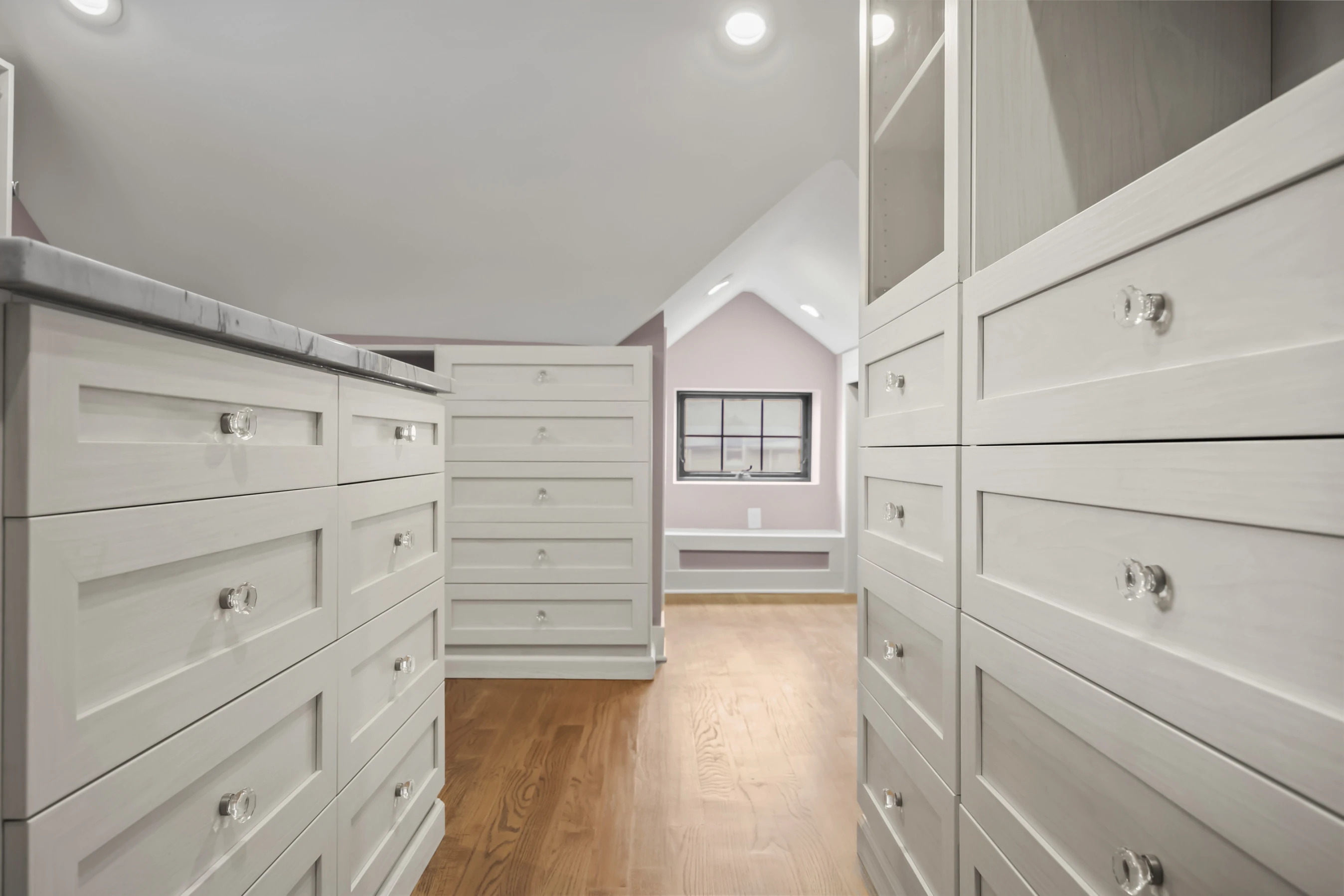
A custom closet should feel like a perfectly tailored suit—fitted to your needs, functional in every detail, and stylish enough to enjoy every day. But just like a poor tailor can ruin a beautiful fabric, even the best closet materials won’t shine if the design falls flat. If your closet feels cramped, chaotic, or just not working for you, design mistakes may be to blame.
In this article, we’ll walk through the most common closet design errors that homeowners make and how to avoid them. Whether you’re working with a walk-in, a reach-in, or a spare room makeover, avoiding these pitfalls will help you maximize storage, improve flow, and get the daily function you deserve.
Mistake #1: Ignoring Inventory
One of the biggest reasons closets fail is simple: they weren’t designed for what you actually own. A closet might look beautiful in a showroom, but if it doesn’t match your real wardrobe, it won’t be functional.
Before designing your closet, take inventory of what you own. How many long-hanging items do you have? How many pairs of shoes? Do you store your bags, jewelry, or seasonal gear in the closet? What about athletic wear, laundry baskets, or luggage?
Closets designed without a clear inventory end up wasting space on features you don’t need while lacking what you do.
Mistake #2: Single Hanging Rod Syndrome
One long rod with a shelf above it might work for basic storage, but it’s a poor use of vertical space. Double-hang rods allow for two rows of shirts, blouses, or pants, instantly doubling your hanging capacity. Combine this with a section for long-hang items like dresses or coats, and you’ll immediately see better flow.
Unused space above rods is another common issue. Add upper shelves or cabinets for out-of-season items, bags, or bins.
Mistake #3: Not Using Adjustable Elements
Your wardrobe changes over time. Adjustable shelving and movable rods allow your closet to evolve with you. Whether you swap heels for sneakers, dress shirts for sweatshirts, or start storing kids’ clothing instead of your own, flexibility matters.
Fixed shelves limit your options and often leave gaps between storage zones. Adjustable components make it easy to accommodate changes without starting from scratch.
Mistake #4: Forgetting About Floor Space
Floor space in a closet often becomes dead space—or worse, a clutter trap. But when used wisely, it can serve as valuable real estate.
Consider integrating pull-out drawers, baskets, or even a shoe tower that sits on the floor. A built-in hamper or slide-out laundry bin can also keep your closet neater without taking up visual space.
Pro tip: Avoid stacking loose items or letting shoes pile up on the floor. Once clutter starts, it tends to grow.
Mistake #5: Inadequate Shoe Storage
Shoes are one of the most difficult items to store neatly. Whether it’s boots, heels, sandals, or sneakers, they all require different heights and visibility. Simply placing them on the floor or a few open shelves rarely works long term.
Custom shoe storage—like slanted shelves, cubbies, drawers with clear fronts, or adjustable racks—can make a huge difference. Make sure your closet includes space for your current shoe collection with a little room to grow.
Mistake #6: Skimping on Drawer Space
Many people underestimate how much they fold vs. hang. Undergarments, socks, workout clothes, t-shirts, pajamas—these all benefit from drawer storage.
If your closet doesn’t include drawers, you’ll end up storing these essentials somewhere else, which breaks up your routine and reduces convenience. Even a small bank of drawers can streamline your morning and evening habits.
Mistake #7: Poor Lighting
Lighting can make or break a closet’s function and feel. A dark closet is frustrating and can make even the most beautiful design hard to appreciate. Add overhead lighting, LED strips, or under-shelf lighting to make everything visible.
Smart lighting options like motion-sensor LEDs or backlit mirrors can bring luxury and ease to your everyday routine.
Mistake #8: Not Thinking About Daily Flow
Closet design is more than storage—it’s about workflow. Where do you place the items you use every day? Are accessories buried in drawers? Do you have to bend or stretch uncomfortably to reach essentials?
Place high-use items at shoulder-to-waist level. Keep less-used or seasonal pieces up high or in closed cabinets. Add valet rods for staging outfits, hooks for robes or bags, and mirrors for outfit checks.
Mistake #9: Wasting Corners and Awkward Spaces
Closets often have sloped ceilings, corners, or weird dimensions that go unused. But with a custom design, every inch can work. Install corner shelving, custom cubbies, or pull-out accessories to turn those tricky areas into assets.
Designers like Bella Systems specialize in solving these kinds of challenges with custom cabinetry and built-ins that make the most of your space’s unique layout.
Mistake #10: Sacrificing Style for Function (or Vice Versa)
It’s easy to focus on storage at the expense of aesthetics—or to design something that looks great but lacks usability. The best closets balance both.
Choose durable finishes that match your home’s style. Coordinate hardware, add glass doors or accent panels, and include personal touches like framed photos or decorative bins.
Closets that look beautiful are more likely to stay organized, because they’re more enjoyable to use.
Bonus Tip: Work with a Pro
DIY closet kits might seem budget-friendly, but they rarely make the most of your available space. A custom designer considers how you live, what you own, and how your closet needs to work every day.
Bella Systems offers in-home consultations, 3D renderings, and a full range of materials and upgrades—from built-in hampers to drawer dividers, LED lighting, and their signature Slim Shaker or Celadon finishes.


