
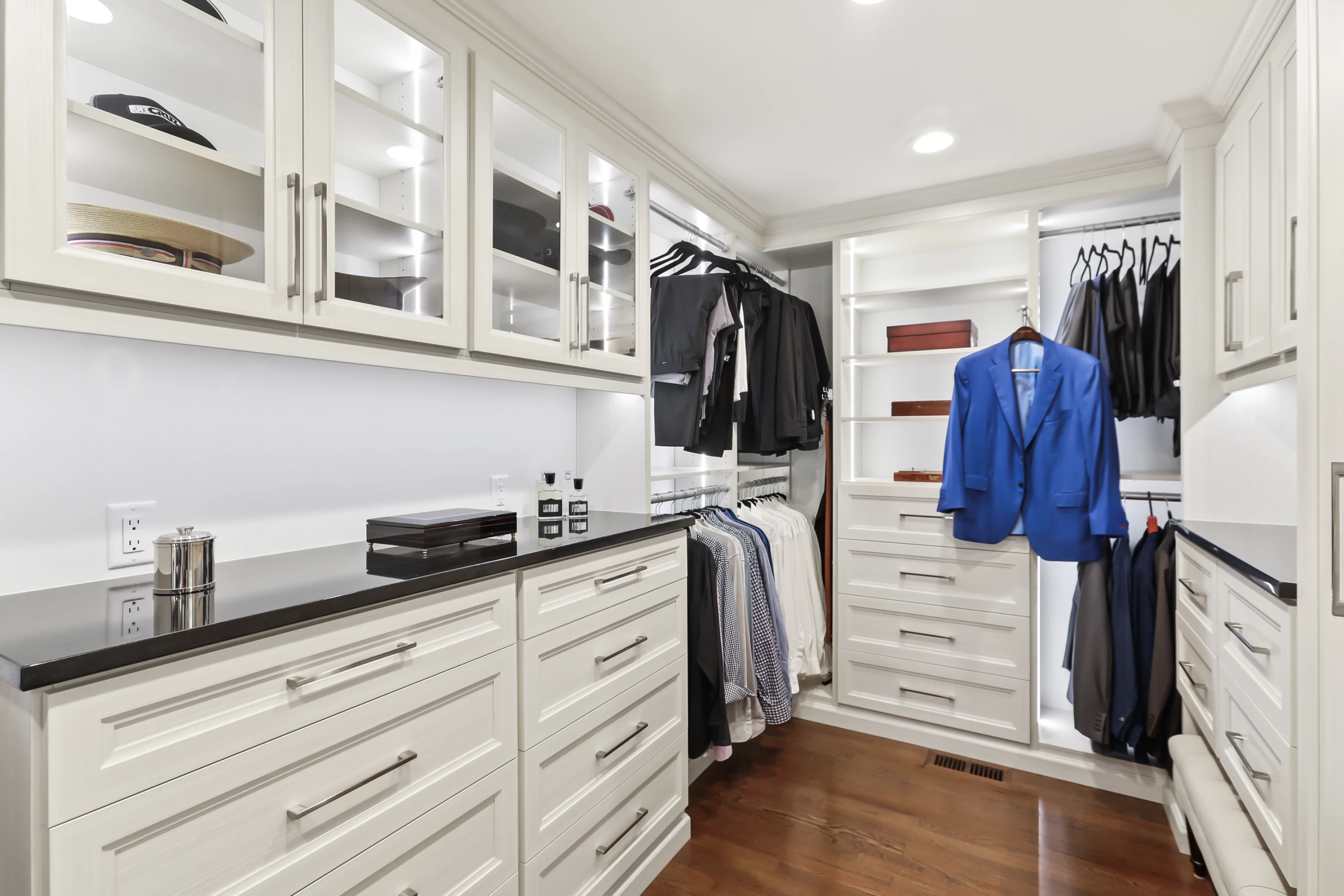
Hanging Rod Systems – Choosing Between Double-Hang, Valet, Pull-Down, and More
Think about how you practically use your closet. You probably reach for a shirt, then pants, then (if necessary) a jacket.
But now look at how those items are actually hanging in your closet. How much vertical space is there above and below the hanging items? Is that space that could be better used for storage a more creative closet design?
Hanging rods are some of the most-used elements in a wardrobe. The right rod setup depends entirely on how the closet is used day by day. For many, a clean single-rod-and-shelf layout is the best way to make use of the space. For others, mixing in additional rod styles can unlock more capacity within the same footprint.
The Starting Point: Single Rod and Shelf
A standard single-rod-and-shelf layout – with one rod mounted between 60 and 72 inches from the floor with a shelf above – is the most common closet configuration (and for good reason!) It’s clean and effective, and keeps everything in its place without overwhelming the closet.
Bella designs and installs a lot of single-rod-and-shelf systems, especially for builder packages. They also work well in secondary closets like guest rooms and hallway closets. It consistently meets the needs of a light wardrobe without overcomplicating things.
Where it starts to fall short is when the primary closet is doing the heavy lifting, and there’s vertical space sitting unused right below the hanging items. That’s when the rod options below come in. Not as fixes to a problem per se, but as upgrades for those who want their primary closet to hold more than it has.
Double-Hang Rods
Double-hang rods divide one tall section into two shorter zones stacked on top of each other.
The top rod typically sits around 80–82 inches from the floor. The lower rod is at 40–42 inches. That creates two roughly 40-inch zones (plenty of room for shirts, blazers, blouses, and folded pants) in the same footprint as a single rod.
A second rod can nearly double the number of short garments you hang in that section without adding any floor space. It’s one of the most affordable vertical upgrades that fit a budget-conscious project.
In condo and apartment closets where height is your biggest available asset, a second rod in the upper section alone can dramatically change your hanging capacity.
Long-Hang Sections
Not everything divides cleanly into two short zones. Dresses and full-length coats need 60–70 inches of vertical clearance. But suits and longer jackets hang better at full height.
There’s nothing wrong with having both – but forcing those pieces into a double-hang section means wrinkled hems and crushed shoulders.
A well-planned layout mixes zones: a double-hang section for shirts and pants, and a long-hang section alongside it for dresses and outerwear. That combination allows a compact closet to hold more than a larger, unplanned one because each section matches the garment types it actually stores.
Valet Rods
A valet rod is a pull-out rod mounted to the side of a cabinet panel. The great thing about a valet rod is that it extends when you need it and tucks back flush when you’re done.
A valet rod is often one of the most underestimated closet additions. It adds real hanging capacity and workflow without consuming any permanent space when it’s not in use.
In both reach-in and walk-in configurations, pull-out features like this one add function without adding visual clutter — which matters as much as raw capacity in a space you interact with every day.
Slide-out rods work on the same principle for seasonal pieces — they extend when you need them and tuck away when you don’t, keeping main sections clean and uncluttered.
Pull-Down Rods: A Specialty Solution for Accessibility
Pull-down rods use an assist mechanism to lower a high-mounted rod down to eye level, then guide it back up after.
We often treat pull-down rods as a specialty solution rather than a general upgrade. But for clients with mobility limitations or reach constraints, a pull-down rod can make a closet usable in ways that other configurations can’t — and that’s the situation we design them into.
Most systems are rated for around 26–33 pounds of clothing, making them well-suited for lighter pieces. Plus, they’re particularly useful in walk-ins with ceilings above 9 feet.
Systems Designed to Grow With You
What separates a Bella system from a builder’s closet is that it’s built to grow with you. As life goes on, our wardrobes change. Homes with families will see more than a few life stages move through the same space.
The system shouldn’t have to be rebuilt every time something shifts.
Designing a closet with adjustable rods, shelves, and drawers allows for a layout that can adapt as needs change. The same principle applies to kids’ rooms. A rod set lower so a child can reach their own clothes can be raised over time as they grow — same system, same hardware, just adjusted to fit where the client is now.
Getting the Installation Right
The rod material may matter less than most people expect, but it still matters. For instance, metal rods are the best choice for densely packed sections or heavier items like coats and suits. They hold more weight without sagging and hold up better than lighter alternatives under years of daily use.
What matters most in installation? Support. Even a strong metal rod will bow or fail under load without adequate brackets and a center support at any span wider than about 36 inches.
Find the Right Hanging Rod System for Your Closet
The right mix of single-rod, double-hang, long-hang, and valet sections — sized around the wardrobe that actually lives in the space — can make any closet work harder without expanding its footprint.
And you can create that space before you add a single shelf or drawer – making hanging rods a great fit in a rebuilt closet space.
Want to see it in action? Bella Systems offers a free design consultation and, in most cases, a 3D rendering of your space within 24 hours so you can see the rod layout designed around your actual wardrobe before anything is built.
Learn more and explore more custom closet ideas on the Bella blog.


