
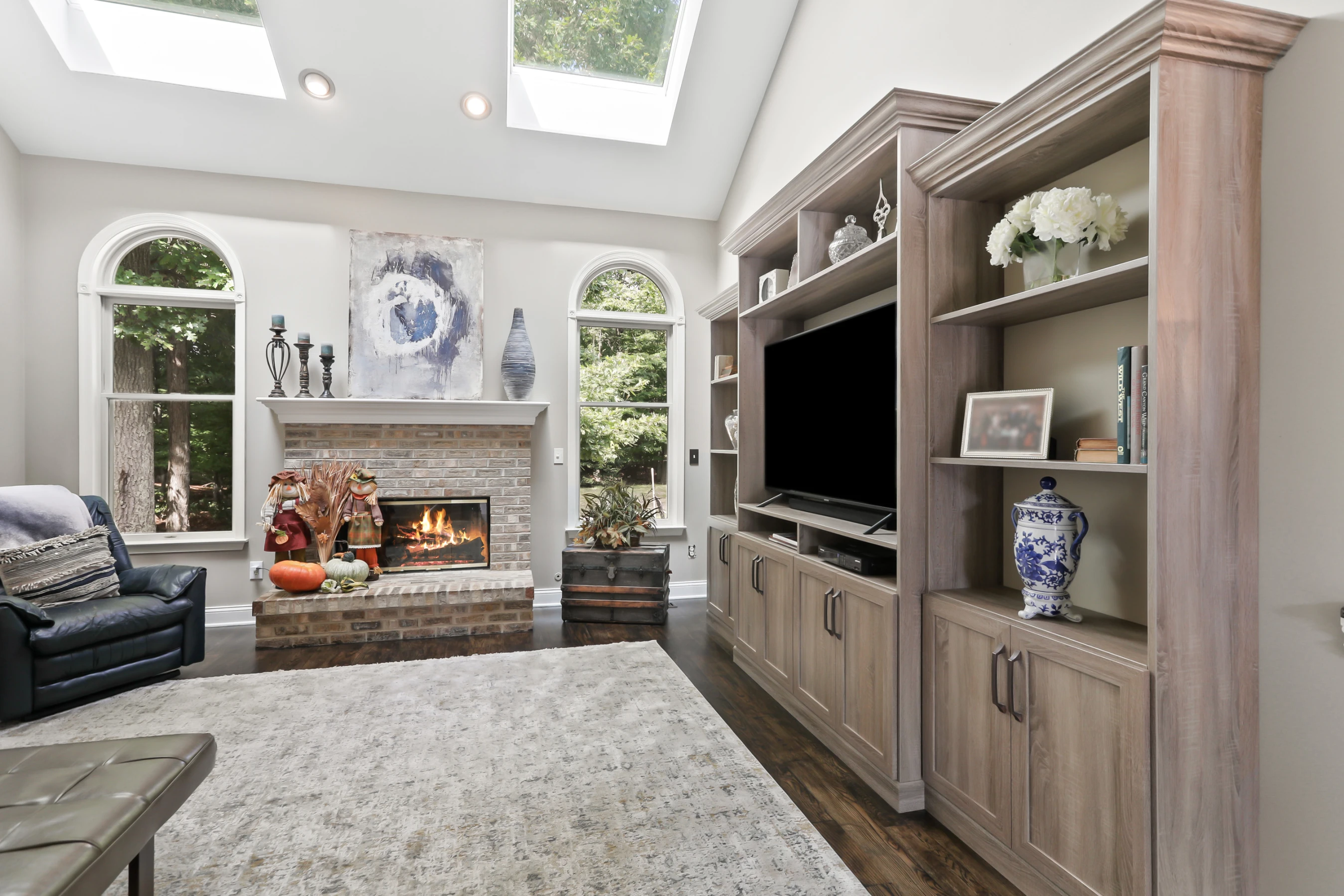
The living room is often the center of daily life. It is where families gather to relax, watch movies, host guests, and spend time together. Because of this, the entertainment center often becomes the focal point of the room. But without thoughtful design, it can quickly become cluttered with cables, electronics, remotes, and media collections.
A well-designed entertainment center does more than hold a television. It provides smart storage for electronics and accessories while enhancing the overall style of the space. Custom entertainment centers allow homeowners to organize media equipment, display decorative items, and create a clean, cohesive look that fits the rest of the home.
By combining functional storage with thoughtful design, entertainment centers can elevate both the appearance and usability of your living space.
Why Built-In Entertainment Centers Work Better
Many homeowners rely on standalone TV stands or furniture pieces that do not fully fit their space. These options can leave awkward gaps, limited storage, and visible cables that make the room feel disorganized.
Custom built-in entertainment centers solve these problems by being designed specifically for your room. They are built to match the exact width, height, and layout of the wall, which creates a seamless appearance.
Built-ins also allow for more thoughtful storage solutions. Shelves, cabinets, and drawers can be arranged around the television to keep everything organized while maintaining a balanced design. This approach helps the entertainment center feel like an integrated part of the home rather than a piece of furniture placed against the wall.
Hidden Storage for Electronics and Accessories
Modern entertainment setups include far more than a television. Streaming devices, gaming consoles, sound systems, and cable boxes all need space to operate properly.
Custom entertainment centers often include enclosed cabinets that hide these electronics while still allowing them to function. Ventilated shelving and wire management systems help keep equipment cool and organized.
Drawers can store remotes, controllers, headphones, and other small accessories that tend to create clutter. By keeping these items behind closed doors, the living room maintains a clean and polished appearance.
This hidden storage is one of the biggest advantages of a custom entertainment center.
Open Shelving for Display and Decor
While closed storage keeps clutter out of sight, open shelving allows homeowners to personalize their entertainment center with decorative elements.
Floating shelves or built-in shelving can be used to display books, framed photos, artwork, or decorative objects. These elements soften the appearance of the television and help balance the design of the wall.
When arranged thoughtfully, open shelving can turn an entertainment center into a feature wall that reflects your personal style. Lighting can also be added to highlight decorative items and create a warm atmosphere in the room.
The combination of open and closed storage keeps the design both functional and visually interesting.
Cable Management That Keeps the Space Clean
One of the biggest frustrations with traditional media furniture is dealing with visible cables. Power cords, HDMI cables, and speaker wires can easily create a messy appearance if they are not managed properly.
Custom entertainment centers often include built-in cable management channels that keep wires hidden behind the cabinetry. These systems route cables through the structure of the unit so they remain out of sight.
This not only improves the appearance of the room but also makes it easier to update or add new devices in the future.
Designing Around the Television
The television is usually the central element of an entertainment center, but it should not dominate the entire design. Custom built-ins help balance the scale of the TV by surrounding it with storage and decorative features.
For larger televisions, tall cabinets or shelving units on either side can create symmetry and visual structure. For smaller rooms, floating cabinets or lower profile designs can keep the wall from feeling too heavy.
Proper placement of the television is also important. Mounting the TV at eye level helps create a comfortable viewing experience while keeping the overall design balanced.
When done correctly, the television becomes part of a cohesive wall design rather than a standalone object.
Integrated Lighting for Atmosphere
Lighting plays an important role in the overall look of an entertainment center. Integrated LED lighting can be installed inside shelves, behind cabinets, or along the edges of the unit.
Soft lighting highlights decorative objects and creates depth within the shelving. It can also reduce eye strain during evening television viewing by providing gentle ambient light in the room.
Lighting options can often be controlled by dimmers or smart home systems, allowing homeowners to adjust brightness based on the activity in the room.
This feature adds both functionality and a high-end aesthetic to the entertainment center.
Custom Finishes That Match Your Home
One of the most appealing aspects of a custom entertainment center is the ability to match it to your home’s existing design. Cabinet finishes, door styles, and hardware can be selected to coordinate with nearby furniture or cabinetry.
Popular options include painted finishes, natural wood tones, or textured surfaces that add depth to the design. Shaker-style cabinet doors, modern slab fronts, or glass panels can all create different visual effects.
These details help the entertainment center feel like a natural extension of the room rather than a separate piece of furniture.
Storage for More Than Just Media
Although entertainment centers are designed for televisions and electronics, they can also serve many other storage purposes. Built-in cabinets can store board games, blankets, books, or seasonal decor.
In family rooms, lower cabinets are often used for toy storage, helping keep the living area tidy while still providing easy access for children.
Some homeowners also use entertainment centers as a central hub for smart home devices or charging stations. This versatility allows the unit to serve multiple functions beyond just media storage.
Why Custom Design Makes the Difference
While pre-made media furniture may offer a quick solution, it rarely delivers the same level of function or visual impact as a custom entertainment center.
Custom designs take into account the exact dimensions of your space, the size of your television, and the storage you need. This allows designers to create a layout that feels balanced and efficient.
Professional installation also ensures that the cabinetry is secure, durable, and designed to last for many years.
When done correctly, a custom entertainment center becomes one of the most visually impressive and practical elements in the home.
Final Thoughts
An entertainment center should do more than hold a television. It should bring together media storage, organization, and design in a way that enhances the entire room.
With custom cabinetry, hidden storage, open shelving, and thoughtful lighting, a built-in entertainment center can transform a plain wall into a stylish and functional centerpiece.
By combining media storage with elegant design, homeowners can create a living space that feels organized, inviting, and perfectly suited to everyday life.


